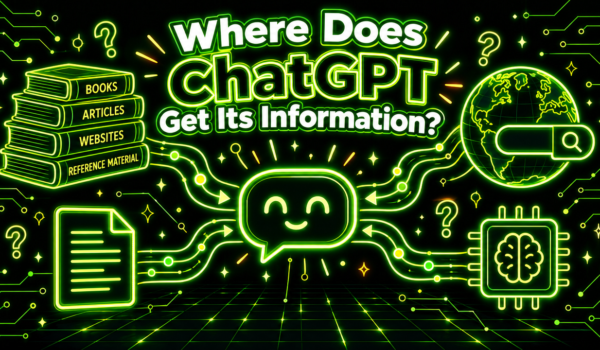
ChatGPT gets its information from four places. First, its training data: a huge snapshot of public web pages, licensed content and material created by people who train the model, which it learned from before a fixed cutoff date. Second, live web search, which it uses for current or specific questions and which comes with links to sources. Third, anything you give it in the conversation, such as files, pasted text or connected apps. Fourth, its memory of your past chats and custom instructions, if those features are on. It does not look things up in a single database of facts, and without a search it can be wrong or out of date.
That is the short answer to where does ChatGPT get its information. This guide explains each source in plain terms, how ChatGPT decides which to use, why answers can be wrong, how to check them, and what it means for businesses that want ChatGPT to describe them accurately.

Where does ChatGPT get its information? The four sources
| Source | What it is | When it is used | Shows sources? |
|---|---|---|---|
| Training data | Text the model learned from before its cutoff date | Every answer, as background knowledge | No |
| Web search | Live pages retrieved for your question | Current, local or specific questions, or when you ask | Yes, with citations |
| Your input | Files, pasted text, images and connected apps | When you share them in the chat | It refers to your files |
| Memory and instructions | Saved details and preferences from past chats | When memory or custom instructions are on | No |
1. Training data
When people ask where does ChatGPT get its information, they usually mean training. Most of what ChatGPT “knows” comes from it. OpenAI’s help article on how its models are developed describes three kinds of training data: information that is publicly available on the internet, information OpenAI licenses from third parties, and information that users, human trainers and researchers provide or generate.
During training, the model reads that text and learns patterns: how words relate, how facts are usually stated, how questions are usually answered. It does not store a copy of each page. That is why ChatGPT can explain a concept fluently but cannot always tell you exactly which page it learned it from.
After the initial training, people refine the model’s behaviour. Trainers rate and compare answers, and the model is adjusted to prefer helpful, accurate and safe responses. This shapes how ChatGPT answers more than what it knows.
The knowledge cutoff
Every model has a training cutoff date. Anything that happened after that date is missing from its built-in knowledge. If you ask about recent events, new products or current prices without a search, ChatGPT may give an outdated answer or say it does not know.
Licensed and partner content
OpenAI has signed content agreements with a number of publishers and platforms. Reddit, for example, announced a partnership with OpenAI in 2024 that gives OpenAI access to Reddit content through Reddit’s data API. These deals feed both training and, in some cases, how content appears in ChatGPT answers. Our guide to whether ChatGPT uses Reddit covers that partnership in more detail.
2. Web search
For questions where current or specific information matters, ChatGPT can search the web. OpenAI’s ChatGPT search help page explains that search answers include inline citations and a Sources panel. When search is used, the honest answer to where does ChatGPT get its information is: from the web pages it just read, plus its training.
ChatGPT decides on its own when to search, and you can also ask it to. Searches are more likely for news, prices, sports scores, weather, local businesses, product comparisons and anything that changes often.
Behind the scenes, ChatGPT search uses third-party search providers, with Microsoft Bing a long-standing partner, along with OpenAI’s own crawler, OAI-SearchBot. OpenAI’s crawler documentation also describes ChatGPT-User, which fetches a specific page when a user’s request needs it, and GPTBot, which collects data for training. Each can be controlled separately in a site’s robots.txt file.
3. What you give it
The third answer to where does ChatGPT get its information is you. ChatGPT can read files you upload, text you paste, images you share and, on some plans, data from apps you connect, such as cloud drives or calendars. In those cases, answers about your own documents come from the documents, not from the web or training data.
This is the most reliable way to get accurate answers about a specific contract, report or dataset: give ChatGPT the source and ask it to work from that.
4. Memory and custom instructions
If memory is turned on, ChatGPT can remember details from earlier chats, such as your job, your projects or your preferences, and use them later. Custom instructions let you tell it how you want it to respond. Both shape answers, but neither adds facts about the world. You can view, change or delete memories in ChatGPT’s settings.
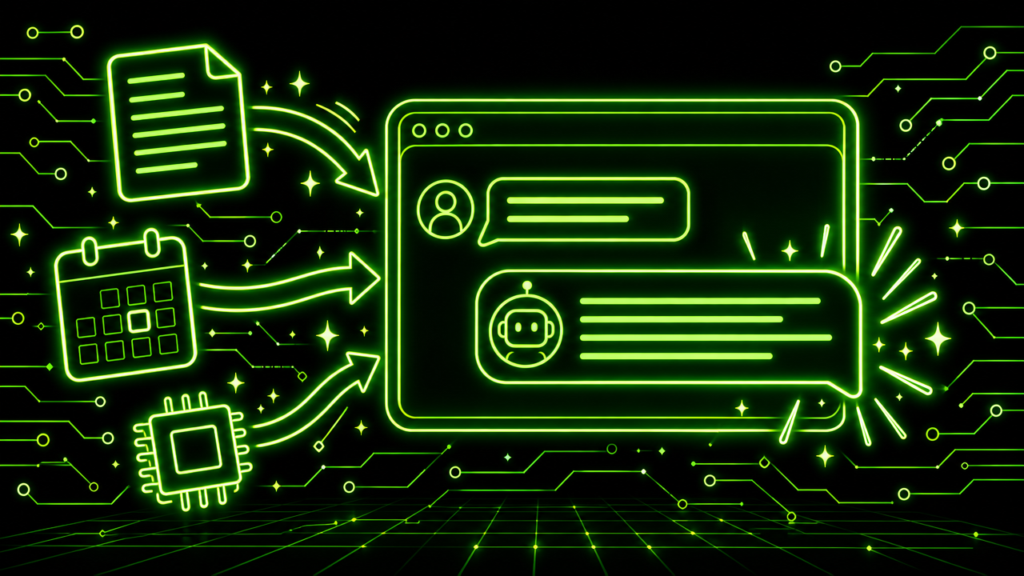
Where does ChatGPT get its information for different questions?
The answer changes with the question. A few examples make the pattern clear:
- “Explain how a heat pump works.” Mostly training data. The physics has not changed, so no search is needed.
- “What is the best heat pump for a cold climate this year?” Likely a web search, because models and prices change. Expect citations to review sites, manufacturers and forums.
- “Summarise this quote from my installer.” The file or text you share.
- “Which option fits the budget I mentioned last week?” Your memory and earlier chats, if memory is on, plus training data.
So where does ChatGPT get its information in practice? Usually from more than one place at once. It uses training data to understand the question and write the answer, and adds search, files or memory when the question needs them.
How ChatGPT’s sources have changed over time
When ChatGPT launched in late 2022, it answered only from training data and could not browse the web. In 2023, OpenAI tested browsing features that let it fetch pages. In late 2024, OpenAI launched ChatGPT search, which built live web results and citations into normal chats, first for paying users and then for everyone. Since then, file uploads, connected apps and memory have added more ways for it to work from information beyond its training.
That history explains a common confusion. Many people still believe ChatGPT cannot see anything after its cutoff date. That was true at launch. Today, where does ChatGPT get its information depends on whether a search runs, which is why the same question can get an old answer one day and a current, cited answer the next.
What this means for students and researchers
For school or research work, treat ChatGPT as a starting point, not a source. If an answer matters, ask it to search, open every citation, and cite the original page or paper rather than ChatGPT. Never cite a reference it gives you without finding it yourself, because references produced from training data alone can be invented. Many schools also have rules on using and disclosing AI tools, so check yours.
How ChatGPT decides which source to use
Every answer draws on training data. The question of where does ChatGPT get its information beyond that depends on what you ask:
- General knowledge questions (“What is compound interest?”) are usually answered from training alone.
- Current or specific questions (“What did the Fed decide this week?”) usually trigger a web search.
- Questions about your files are answered from the files you shared.
- Personal questions (“Plan my week”) may use memory and instructions.
If you are not sure where does ChatGPT get its information for a given answer, look for citations. No citations usually means the answer came from training data, which can be out of date.
Why ChatGPT gets things wrong
Knowing where does ChatGPT get its information also explains its mistakes:
- Outdated training data. Facts that changed after the cutoff can be wrong in answers that do not use search.
- Hallucinations. The model predicts plausible text. Without a source to check, it can produce confident claims, quotes or references that are false.
- Bad sources. When it searches, it can pick a weak or outdated page and repeat its errors.
- Blended answers. It can merge facts from several pages into a sentence none of them says.
- Misreading the question. Vague questions get vague or wrong answers.
How to check what ChatGPT tells you
- Ask it to search for anything current or important.
- Open the citations and confirm the page says what the answer claims. Our guide to ChatGPT citations shows how.
- Ask for the exact quote behind a key claim, then find it on the page.
- Cross-check important facts with an official or primary source.
- Give it the source yourself when accuracy matters, by uploading the document.
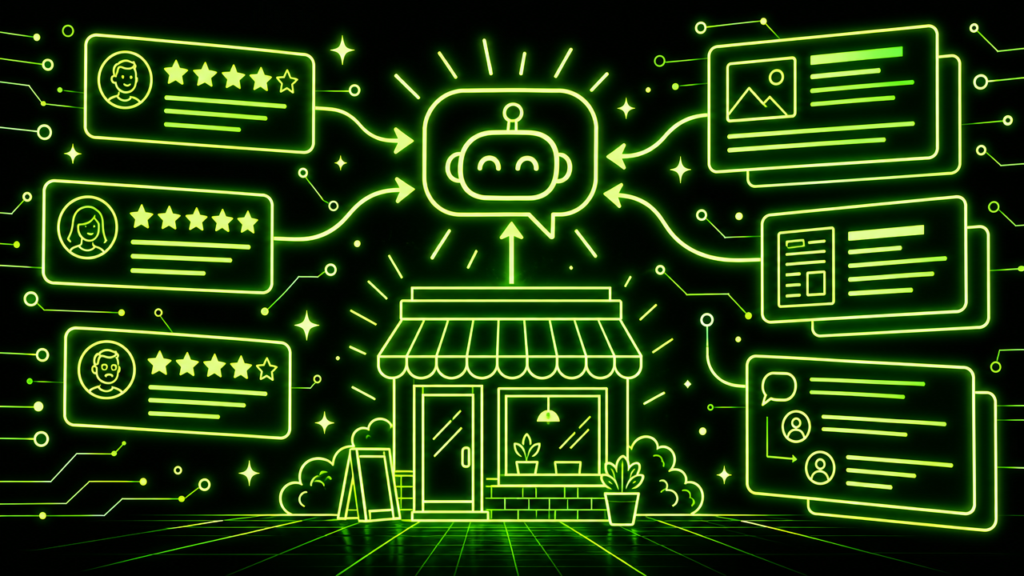
Where does ChatGPT get its information about businesses?
For businesses, this is the part that matters most. When someone asks ChatGPT about your company or your category, its answer draws on:
- Your own website, if it is crawlable and clear.
- Review sites and directories that list and rate businesses like yours.
- Publishers and comparison articles that mention you or your competitors.
- Forums and communities, especially Reddit threads where people share experiences and recommendations.
- Older content in its training data, which may describe you as you were years ago.
So the answer to where does ChatGPT get its information about your brand is: mostly from what is written about you across the web, not only from what you write yourself. That is why a single outdated review or an old Reddit thread can shape how ChatGPT describes you.
Where does ChatGPT get its information about products?
Product questions are where search matters most. When you ask ChatGPT to recommend a laptop, a CRM or a running shoe, it usually searches and then leans on three kinds of pages: review and comparison articles, the makers’ own product pages, and community discussions where real owners share what they like and dislike. Reddit threads come up often for these questions because they are full of first-hand experience.
That has a practical side for shoppers and sellers. Shoppers should open the cited reviews and threads before buying, since the summary may skip important caveats. Sellers should know that where does ChatGPT get its information about their products is often a handful of review pages and threads, and those pages deserve as much attention as the product page itself.
How to influence what ChatGPT says about you
- Allow OAI-SearchBot in your robots.txt and make sure your firewall does not block it.
- Get indexed in Bing and keep your sitemap up to date.
- Publish clear, current facts about your products, pricing and policies, with the answer near the top of each page.
- Keep your information consistent across your site, listings and profiles.
- Earn fair coverage on the review sites and publications ChatGPT cites for your category.
- Take part in relevant Reddit threads with helpful, disclosed answers where the community’s rules allow it.
- Consider an llms.txt file that points AI tools to your key pages. Our guide to llms.txt explains how.
Our guides on how to rank in ChatGPT and ChatGPT SEO go deeper on each step.
Where does ChatGPT get its information compared with other AI tools?
| Tool | Main sources | Shows sources by default? |
|---|---|---|
| ChatGPT | Training data, plus web search when needed | Only when it searches |
| Perplexity | Live web search on almost every answer | Yes |
| Google Gemini and AI Overviews | Training data plus Google’s search index | AI Overviews show links; Gemini varies |
| Microsoft Copilot | Training data plus Bing results | Often |
| Claude | Training data, plus web search when enabled | When it searches |
Ask where does ChatGPT get its information compared with these tools, and the answer is a similar pool of public web content, which is why the same review sites, publishers and Reddit threads show up across them. Our guide to AI citations compares how each one picks sources.
Does ChatGPT learn from my conversations?
Depending on your account type and settings, OpenAI may use conversations to improve its models. You can turn this off in ChatGPT’s data controls, and business and enterprise plans are generally excluded from training by default. Check OpenAI’s current privacy settings and policies, since these options change over time. Turning off training does not delete your chats, and memory is a separate setting.
Common myths about where ChatGPT gets its information
- “ChatGPT searches Google for every answer.” No. Many answers come from training alone, and Bing, not Google, is the search partner OpenAI has long named.
- “ChatGPT has a database of verified facts.” No. It learned patterns from text and can be wrong.
- “If ChatGPT says it, a source must exist.” Not always. Without a search, it can invent references.
- “ChatGPT knows everything on the internet.” No. It learned from a large but limited snapshot, plus whatever it searches.
- “Blocking all AI bots keeps you out of ChatGPT.” Partly. Blocking OAI-SearchBot keeps your pages out of search answers, but older training data and third-party mentions of you can still shape what it says.
Frequently asked questions
Where does ChatGPT get its information from in one sentence?
From training on a large mix of public web text, licensed content and human feedback, plus live web search, your own files and its memory of your chats when those are used.
Where does ChatGPT get its information about recent news?
From a live web search. Without one, its knowledge stops at the training cutoff, so ask it to search and check the dates on the cited articles.
Where does ChatGPT get its information about my company?
From your website if it can crawl it, plus reviews, directories, articles and forum threads that mention you, and older text in its training data. Keeping those sources accurate is the best way to keep its answers accurate.
Can I see exactly which pages ChatGPT was trained on?
No. OpenAI describes the types of training data but does not publish a list of every page. You can only see specific sources when ChatGPT runs a search and shows citations.
Does ChatGPT use the internet in real time?
Only when it searches the web. Otherwise it answers from training data, which stops at a cutoff date.
Does ChatGPT use Reddit?
Yes. Reddit content appears in its training data and in its web search results, and Reddit and OpenAI announced a data partnership in 2024.
How do I know if ChatGPT’s answer is current?
Check for citations. If it searched, it will show sources you can open and date. If not, ask it to search.
Can ChatGPT see private websites or paywalled content?
Generally not through search, unless you are connected to a service that gives it access. It can read files you upload yourself.
Why does ChatGPT give different answers to the same question?
Its answers are generated fresh each time, searches can return different pages, and memory or instructions can change the context.
Want to see where your customers are already asking? Get a free Reddit Opportunity Report showing which Reddit threads already rank for your keywords.