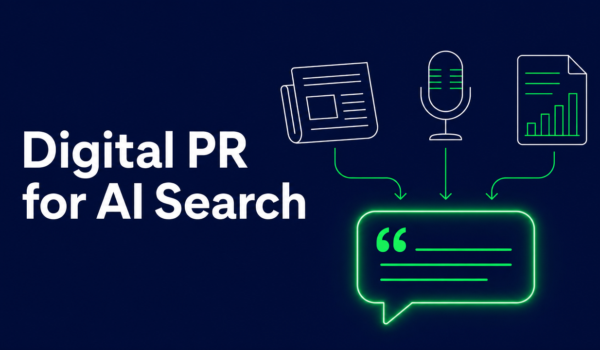
Digital PR for AI search is the work of earning coverage in the publications, research and third-party sites that ChatGPT, Claude, Gemini and Google’s AI tools cite when they answer questions about your category. AI answers draw mostly on sources you do not own or pay for, so a mention in a trade publication, a data study other sites reference, or a quote in a news article can shape what AI tools say about you. The goal shifts from collecting backlinks to being named, accurately, in the sources AI tools trust for your topic.
Why earned media matters for AI answers
Muck Rack’s What Is AI Reading? report from May 2026 analyzed more than 25 million links cited by ChatGPT, Claude and Gemini. It found that about 99% of cited links came from non-paid sources, with paid and advertorial content at 0.3% and press releases at 1.1%. About 84% came from what Muck Rack calls earned media, a broad group that includes journalism, academic research, government sources and third-party sites. Journalism alone made up about 27%.
Two other findings matter for planning:
- Recency. Of journalism citations with known dates, 57% were published in the last 12 months, and citations peaked in the month after publication.
- Query type. Questions about industry trends cited journalism in 46% of responses, more than twice the rate for how-to and comparison questions.
Muck Rack sells PR software, and its “earned” category is broad, so read the numbers as direction rather than precise shares. The pattern still holds: paid placements and press releases barely register, while independent coverage does.
What digital PR for AI search looks like
| Tactic | Why AI tools pick it up | How to start |
|---|---|---|
| Original data studies | Other sites cite the numbers, and AI tools repeat them | Survey your customers or analyze your own data each year |
| Expert commentary | Trend questions cite journalism heavily | Answer reporter requests in your niche quickly |
| Trade publication features | Category answers lean on industry outlets | Pitch practical stories to the editors who cover your market |
| Inclusion in roundups | “Best” questions draw on lists and comparisons | Brief the writers of the lists AI tools already cite |
| Podcasts and webinars with transcripts | Transcripts give AI tools quotable text | Ask hosts to publish transcripts or show notes |
| Wikipedia-style reference sources | Some AI tools cite them heavily | Earn coverage that independent editors can cite, and never edit your own page |
A step-by-step plan
- Find the sources AI already cites. Ask AI tools the questions your buyers ask and list the publications, studies and sites in the citations. Our guide to AI citations explains how to read them.
- Pick three to five target outlets. Choose the ones that appear most often for your category and still accept pitches or contributed work.
- Create one piece of news value. A data study, a clear opinion on a trend, or a useful benchmark gives journalists a reason to cover you.
- Pitch with the facts up front. Lead with the finding, give the method in a sentence, and offer an expert for comment.
- Refresh yearly. Because recent coverage is cited more often, repeat studies on a schedule rather than once.
- Track mentions, not only links. A brand mention without a link can still shape AI answers. Our guide to unlinked brand mentions covers how to find and use them.
Stay honest with disclosures
If you pay for placement, give free products to reviewers, or have employees post about your company, the FTC expects that connection to be disclosed. The FTC’s Endorsement Guides FAQ says reviewers who get free products should disclose it, that payment is a material connection, and that employees should disclose their employment when they review their company’s products. Disclosures need to be clear and close to the endorsement, not buried in a link. Paid content also does little for AI visibility according to the Muck Rack data, so earned coverage is both the safer and more effective route.
For how ChatGPT handles brand mentions specifically, see our guide to ChatGPT brand mentions.
To see which publications and questions your brand is missing from today, get a free AI Search Opportunity Report.
Frequently asked questions
Do press releases help with AI visibility?
Rarely on their own. Press releases made up about 1.1% of AI citations in Muck Rack’s May 2026 report. They help when journalists use them to write coverage, which AI tools cite far more often.
Is digital PR different from link building?
Yes. Link building aims for links that raise search rankings. Digital PR for AI search aims for accurate mentions in sources AI tools cite, with or without a link.
Which AI tools rely most on journalism?
It varies. Muck Rack found that the three providers it studied cite very different sources, with little overlap beyond Wikipedia, so check citations in each tool your buyers use.
How long does it take to see results?
A single strong placement can show up in answers that use live search soon after it is published. Changing how AI tools describe your brand across many questions usually takes several months of steady coverage.