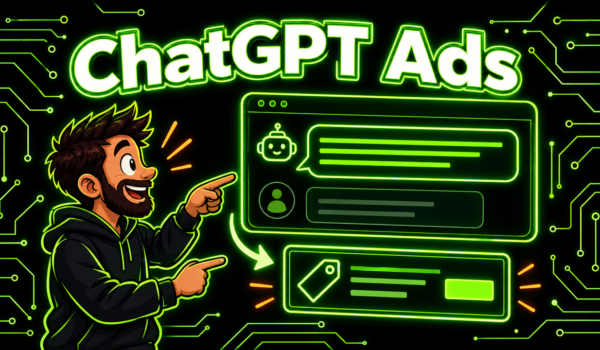
ChatGPT ads are paid placements that appear inside ChatGPT, shown in clearly labeled boxes below an answer when a sponsored product or service matches the topic of the conversation. OpenAI began testing ChatGPT ads in early 2026 for users on the Free plan and the low-cost Go plan, while paid tiers such as Plus, Pro, Business and Enterprise stay ad-free. OpenAI says ads do not influence the answers ChatGPT gives, advertisers do not see private conversations, and users can control how their ad experience is personalized. For marketers, ChatGPT ads add a paid channel next to the organic work of getting your brand mentioned and cited in AI answers.
This guide explains how ChatGPT ads work, who sees them, how buying works, how they differ from organic AI visibility, and how to decide whether they belong in your plan. Features and availability change quickly, so check OpenAI’s current documentation before you commit budget.
What are ChatGPT ads?
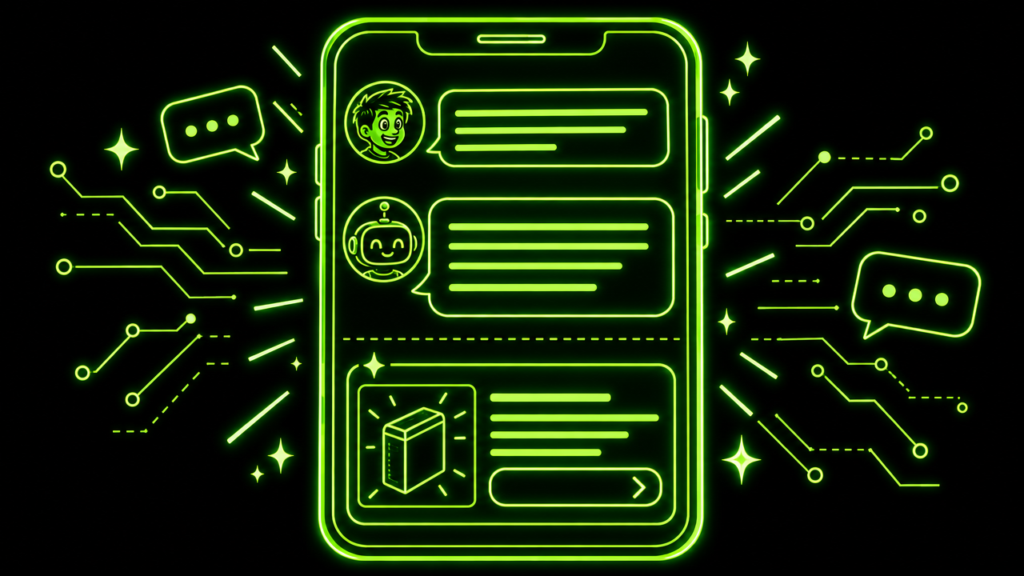
ChatGPT ads are sponsored units that sit beneath ChatGPT’s response. They are visually separate from the answer and marked as sponsored. A user who asks for help planning a kitchen remodel, for example, might see the full answer first and then a labeled box from a home improvement retailer below it.
OpenAI formally confirmed it would test ChatGPT ads in January 2026 and started showing them in February 2026 to Free and Go users in the United States. The program then expanded. In an August 2026 update on expanding access to ChatGPT ads, OpenAI said the platform had reached a $1 billion annualized revenue run rate in under 200 days, was used by tens of thousands of advertisers, and was opening direct buying through Ads Manager in more regions, including India, Europe, the Middle East and North Africa.
Who sees ChatGPT ads?
ChatGPT ads are shown to users on the Free plan and the Go plan. Subscribers to Plus, Pro, Business and Enterprise do not see ads. That split matters for targeting: the paid audience on ChatGPT skews toward people who use it for work or heavy personal use, and those people will not see your ads at all.
Ads also depend on context. An ad appears only when a relevant sponsored product or service matches the conversation, so many answers carry no ad. Sensitive topics may be excluded entirely.
How ChatGPT ads work
The basic flow is simple, though the details sit inside OpenAI’s systems.
- A user on an ad-supported plan asks ChatGPT a question.
- ChatGPT writes its answer as usual, without input from advertisers.
- The ad system looks at the conversation’s context and checks for a relevant sponsored offer.
- If one fits, a labeled ad box appears below the answer.
- The user can click through to the advertiser, ignore the ad or adjust ad personalization settings.
Reporting on the launch described targeting based on conversational context rather than classic keyword lists. Instead of bidding on “running shoes”, an advertiser’s offer is matched to conversations where running shoes are the topic.

How to buy ChatGPT ads
Buying options have changed fast. At launch, ChatGPT ads were sold to a small group of large advertisers and agencies, with reports of high minimum commitments. OpenAI then opened a self-serve Ads Manager, first in the United States and later in more regions. Today, most advertisers will start in Ads Manager, set a budget, choose what to promote and let the system match ads to relevant conversations.
Because OpenAI keeps adjusting formats, bidding options and measurement, treat any specific pricing you read as a snapshot. Check the current terms in Ads Manager before planning a budget.
ChatGPT ads vs Google Ads
| Factor | ChatGPT ads | Google Ads |
|---|---|---|
| Placement | Labeled box below an AI answer | Search results, Shopping, YouTube, display and more |
| Targeting | Context of the conversation | Keywords, audiences, location and many signals |
| Who sees them | Free and Go users only | Almost all Google searchers |
| Maturity | New, still changing | Two decades of tools and data |
| Measurement | Developing | Detailed conversion tracking |
| Best for | Testing a new, high-intent research channel | Proven, scalable demand capture |
For most businesses, Google Ads remains the core paid search channel. ChatGPT ads are worth testing where your buyers already research in ChatGPT and you can afford some uncertainty in measurement.
Do ChatGPT ads affect ChatGPT’s answers?
OpenAI says no. Its stated policy is that ads are separate from answers and do not influence what ChatGPT recommends. The answer is written first, and the ad sits below it in a labeled box.
For marketers, this has a clear implication: paying for ChatGPT ads does not buy you a mention inside the answer itself. If ChatGPT recommends three competitors in its response and your ad appears below, the user still reads the answer first. Organic visibility, meaning being named and cited in the answer, is a separate job.
ChatGPT ads vs organic AI visibility
Paid and organic work together but do different things.
| Factor | ChatGPT ads | Organic AI visibility |
|---|---|---|
| Where you appear | Below the answer, labeled sponsored | Inside the answer, as a mention or citation |
| Who sees it | Free and Go users only | All users, including paid plans |
| Cost | Pay for placement | Pay in time, content and reputation work |
| Speed | Fast once campaigns run | Builds over weeks and months |
| Trust | Users know it is paid | Reads as a recommendation |
| Durability | Stops when spend stops | Keeps working once earned |
The strongest position is both: named in the answer and present in the ad slot. Our guide on how to get ChatGPT to recommend your business covers the organic side.

Example ad concepts that fit the conversation
The best ChatGPT ads feel like a useful next step after the answer. These sample concepts show the idea.
Conversation: comparing project management tools
The answer lists several tools and their trade-offs. A strong ad offers “A side-by-side feature table for teams under 20, plus a 14-day free trial” and links to a comparison page. It continues the research rather than interrupting it.
Conversation: planning a weekend trip
The answer suggests neighborhoods and activities. A hotel group’s ad highlights “Rooms within walking distance of the old town, free cancellation” and links to a filtered booking page for those dates and areas.
Conversation: fixing a slow laptop
The answer walks through cleanup steps. A repair service’s ad offers “Free remote diagnosis in 15 minutes” with a booking link. The offer matches the problem the user just described.
Each example ties the ad to the specific need in the conversation and promises one concrete thing. Generic brand messages tend to perform poorly in a setting where the user has just read a detailed, tailored answer.
ChatGPT ads by business type
B2B software
B2B buyers often research on paid plans at work, which limits reach. Still, many people explore tools on personal free accounts first. Comparison pages, free tools and trials work better than demo requests as a first step.
Ecommerce
Shopping questions are common in ChatGPT, and ChatGPT ads can place a product next to a buying conversation. Pair ads with strong product pages and reviews, since the answer itself may recommend competitors. Our guide to ChatGPT shopping covers how product recommendations work organically.
Local and service businesses
People ask ChatGPT for local recommendations, but local ad targeting options may be more limited than on Google. Test carefully, and make sure your organic local signals, such as reviews and listings, are strong first.
Who should test ChatGPT ads?
ChatGPT ads tend to make the most sense for a few kinds of advertiser.
- Brands in research-heavy categories, such as software, travel, home improvement and consumer electronics, where buyers ask long comparison questions.
- Advertisers whose target customers use free AI tools heavily, such as students, young professionals and price-conscious shoppers.
- Companies that already run strong search campaigns and want to test the next channel early.
- Brands that are missing from organic answers and want short-term presence while the slower organic work builds.
They make less sense for businesses whose buyers mostly use paid ChatGPT plans, since those users do not see ads, or for advertisers who need precise, proven attribution before spending anything.
How to plan a first ChatGPT ads test
1. Map the conversations you want to appear in
List the questions your buyers ask ChatGPT before choosing a product like yours. These conversations tell you which offers and messages fit. Our post on prompt tracking shows how to build that question list.
2. Check your organic baseline first
Run those questions and see what ChatGPT already says. If competitors are recommended in the answer, your ad will sit below their organic mentions. Knowing that helps you write ads that address the comparison directly.
3. Write ads that continue the conversation
The user has just read a detailed answer. An ad that adds something specific, such as a free tool, a clear price or a comparison page, fits better than a generic slogan.
4. Send clicks to pages that match the question
Land people on a page that answers the exact need, not your homepage. A buyer who asked about kitchen remodel costs should land on a cost guide or estimate tool.
5. Set up measurement
Use tagged links so you can separate ChatGPT ad traffic in analytics. Track conversions on your site. Watch branded search too, since some people will remember your name and search for it later.
6. Run long enough to learn
New ad channels need time and data. Plan a test of several weeks with a fixed budget, then compare cost per lead or sale with your other channels.
Budgeting for a first test
Set a test budget you are comfortable treating as a learning cost. Split it across two or three ad variations and a small set of conversation themes so you can see what works. Keep the test running for several weeks to smooth out daily swings. At the end, compare cost per qualified lead or sale with your existing channels, and decide whether to scale, adjust or pause.
Questions to answer before you launch
- Which buyer questions should trigger our ads, and do we have landing pages that answer them?
- What does ChatGPT already say about us and our competitors in those conversations?
- How will we separate ad clicks from organic ChatGPT referrals in analytics?
- What result would make us scale, and what would make us stop?
- Who will review results weekly during the test?
Measuring ChatGPT ads
Measurement for ChatGPT ads is still developing, and early reports noted limited attribution tools compared with Google and Meta. A practical approach combines a few sources:
- Ads Manager reporting for impressions and clicks.
- Tagged links and conversion tracking on your own site.
- Branded search trends in Google Search Console.
- A “how did you hear about us?” question on forms, with ChatGPT as an option.
- Referral traffic from chatgpt.com in analytics, which mixes organic citations and ad clicks unless you tag ad links.
Our guide to AI referral traffic explains how to separate these sources.
Privacy and brand safety
OpenAI has said advertisers do not receive access to people’s private conversations and that ads are clearly labeled. For advertisers, that means targeting is handled inside OpenAI’s system rather than through data you receive. Review the content and placement controls in Ads Manager, and check which topics are excluded from ads, especially if you work in health, finance or other sensitive categories.
What ChatGPT ads mean for AI search overall
ChatGPT ads mark a shift in AI search from a purely organic environment to a mixed one, much like Google’s results page decades ago. Other AI products have taken different paths. Perplexity tested sponsored follow-up questions and then wound its program down, while some assistants have stayed ad-free. Our post on Perplexity ads covers that story.
For brands, the lesson from search history is that paid and organic both matter, but organic presence is what persists. Ads can fill gaps quickly. Being the brand that AI tools recommend on their own builds value that keeps working when budgets change.
How ChatGPT ads compare with other AI ad formats
Ads in AI answers are taking a few different shapes across the industry. Google shows ads in and around its AI features in Search, building on its existing ad system and advertiser tools. Perplexity tried sponsored follow-up questions next to answers and later stepped back from advertising. ChatGPT ads use a separate, labeled box below the response.
The common thread is separation. Each company has tried to keep the generated answer visibly apart from paid content, because users who suspect answers are for sale stop trusting them. For advertisers, that separation means the answer and the ad slot are two different contests, and you need a plan for each.
A note on user trust
People use ChatGPT for personal and work questions, and many are sensitive to how ads appear there. Ads that feel helpful and relevant to the conversation are more likely to be welcomed than ads that feel intrusive. Be clear about who you are, avoid exaggerated claims and make the landing page deliver exactly what the ad promised. Respecting the setting protects your brand as well as the channel.
Common mistakes with ChatGPT ads
- Assuming ads will place your brand inside the answer. They appear below it.
- Forgetting that paid-plan users never see ads.
- Sending clicks to a generic homepage instead of a page that matches the conversation.
- Judging results after a few days of data.
- Skipping organic work because ads feel faster.
- Relying on old pricing or format details from launch coverage.
Frequently asked questions
Does ChatGPT have ads?
Yes. OpenAI began showing ChatGPT ads in 2026 to users on the Free and Go plans, in labeled boxes below answers.
Which ChatGPT users see ads?
Free and Go users. Plus, Pro, Business and Enterprise subscribers do not see ads.
Can I pay to be recommended in ChatGPT’s answers?
No. OpenAI says ads do not influence answers. Being named in the answer depends on organic factors such as reviews, third-party mentions and clear content.
How do I start advertising on ChatGPT?
Use OpenAI’s Ads Manager where it is available in your region, or work with an agency that buys ChatGPT ads. Check current requirements before you plan a budget.
How are ChatGPT ads targeted?
Ads are matched to the context of the conversation, with personalization controls available to users.
Can I turn off ChatGPT ads as a user?
Users on paid plans such as Plus and Pro do not see ads. Users on ad-supported plans can adjust how their ad experience is personalized in their settings.
Do ChatGPT ads show in every country?
No. OpenAI has expanded ChatGPT ads region by region, so availability depends on where you and your audience are. Check Ads Manager for the current list.
Are ChatGPT ads worth it?
They can be for research-heavy categories where your buyers use free AI tools. Test with a fixed budget, measure carefully and keep investing in organic AI visibility alongside them.
Want to see where your customers are already asking? Get a free Reddit Opportunity Report showing which Reddit threads already rank for your keywords.