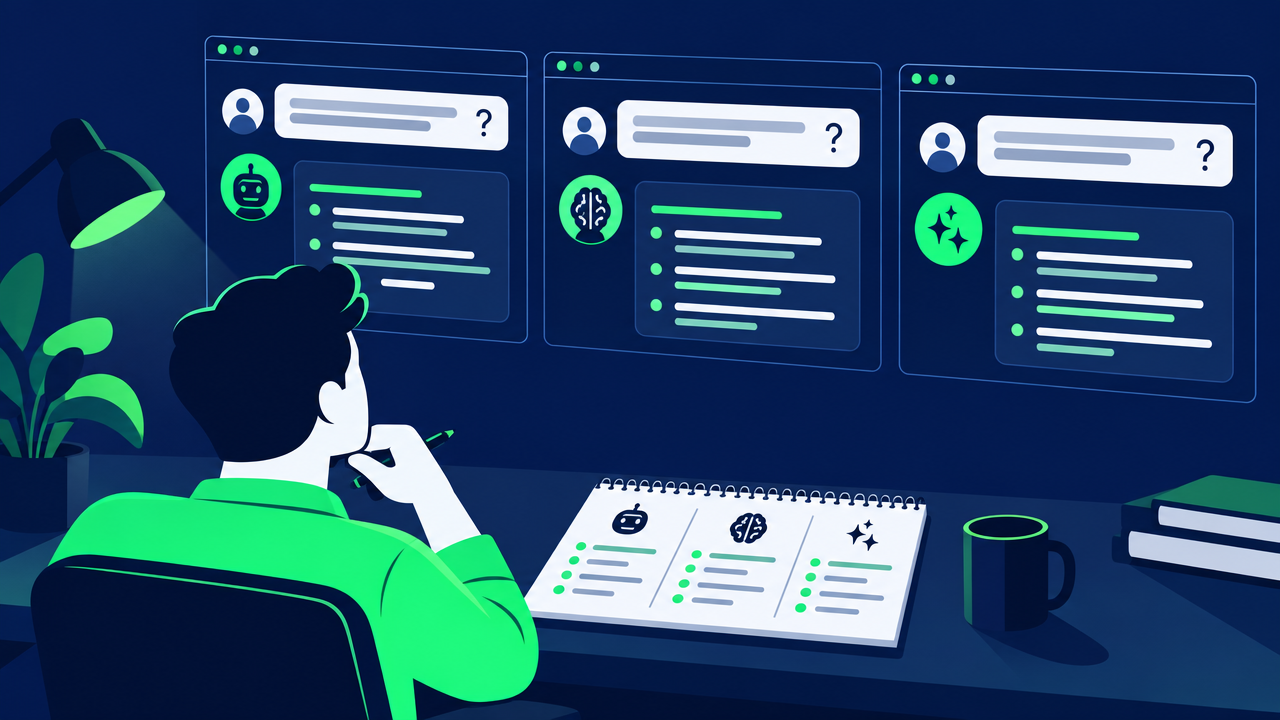
An AI visibility audit is a structured check of how AI assistants such as ChatGPT, Gemini, Perplexity and Google’s AI results describe your brand. You ask each one the questions your buyers ask, run each question more than once, and record whether you’re mentioned, how you’re described, which competitors appear and which sources the answers draw on. Done by hand, a first AI visibility audit takes two to three hours, and repeating it monthly shows whether your work is moving the numbers.
This guide gives you the full method, a scoring sheet you can copy, and what to do with the results.
What is an AI visibility audit?
It’s the AI-search version of checking where you rank on Google. Instead of one results page, you’re checking answers that are written fresh each time and can differ between assistants, between runs and between users. An AI visibility audit doesn’t give you a position. It gives you a pattern: how often you’re named across a set of questions, and why.
A good audit answers four questions:
- Presence: do assistants mention you for the questions your buyers ask?
- Accuracy: when they do, are the details right, such as price, features and who you serve?
- Competition: who gets named instead of you, and how often?
- Sources: which pages do the answers draw on, and are you present on them?
Why do you need an AI visibility audit?
More buyers now ask an assistant before they search, and many never click through to a website. If an assistant recommends three competitors and leaves you out, you lose that buyer without ever knowing they existed. Your analytics won’t show it, because there was no visit to record.
Citation patterns also move quickly. Semrush reported that, according to Promptwatch data, Reddit’s share of ChatGPT Search citations dropped sharply in August 2026 over just a few days. Our article on whether ChatGPT uses Reddit covers that change. An AI visibility audit repeated each month is how you notice shifts like that in your own category.
How to run an AI visibility audit, step by step
Block out two to three hours for the first audit. Later rounds are faster because the setup is done.
Step 1: Write your prompt list
List 10 to 20 questions your buyers ask before they buy. Use their words, not yours. Mix four types:
- Category questions: “What’s the best [category] for [type of customer]?”
- Problem questions: “How do I fix [problem your product solves]?”
- Comparison questions: “[Your brand] vs [competitor]” and “alternatives to [competitor]”.
- Brand questions: “What is [your brand]?” and “Is [your brand] any good?”
Sales calls, support tickets and Reddit threads are good places to find the real wording. Our guide to Reddit competitor research shows how to collect buyer questions from threads.
Step 2: Choose your assistants
Test the assistants your buyers use. For most businesses that means ChatGPT with search on, Google’s AI Overviews and AI Mode, Gemini and Perplexity. Add Claude or Microsoft Copilot if your buyers use them at work. Note the date and the model or mode you used each time.
Step 3: Run each prompt more than once
Ask each question two or three times in each assistant, in a fresh chat each time. Answers vary between runs, so a single answer can mislead you. If you can, use a logged-out or clean session so your own history doesn’t change the result.
Step 4: Record what you see
For each run, note whether your brand was mentioned, where it appeared in the answer, how it was described, which competitors were named and which sources were shown. Use the scoring sheet below so every round is recorded the same way.
Step 5: Check the sources
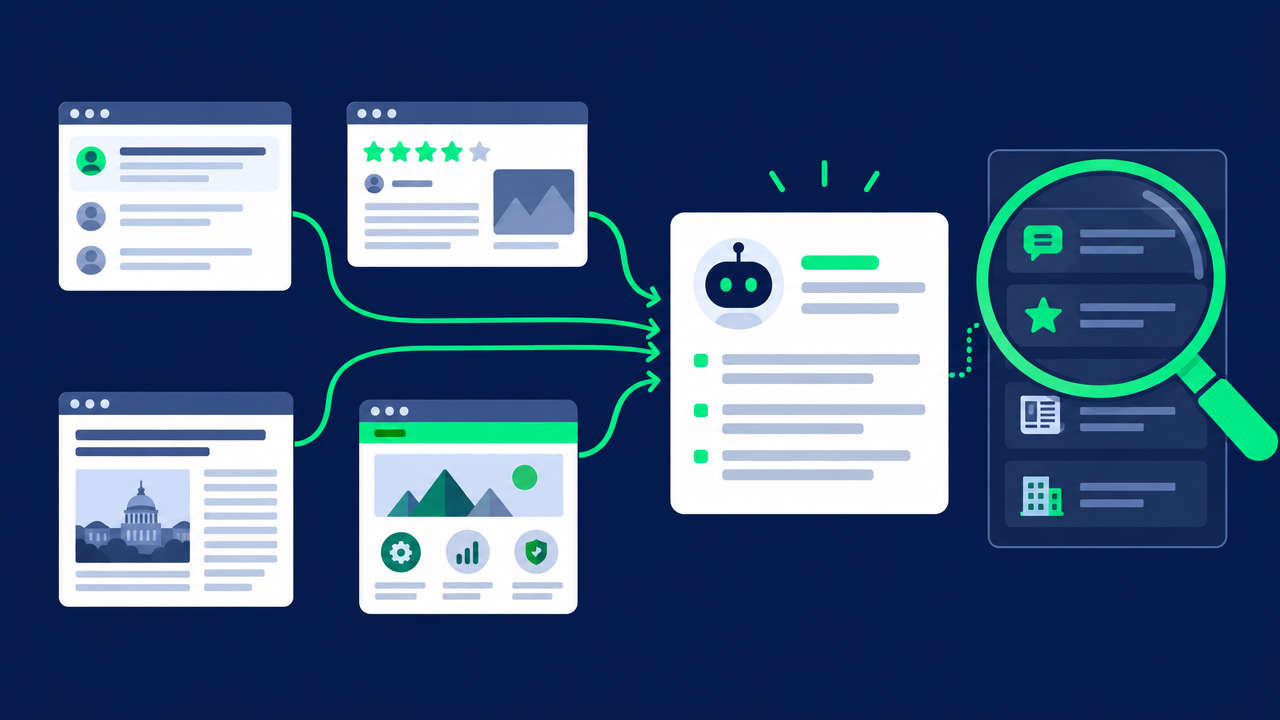
Open the sources each assistant cites. You’ll usually find a mix: review sites, comparison articles, forum threads, news stories and company websites. Note the ones that appear again and again. Those are the pages that shape how assistants see your category.
Step 6: Compare with competitors
Count how often each brand appears across all your runs. The share of answers that mention you, compared with your top competitors, is your most useful single number.
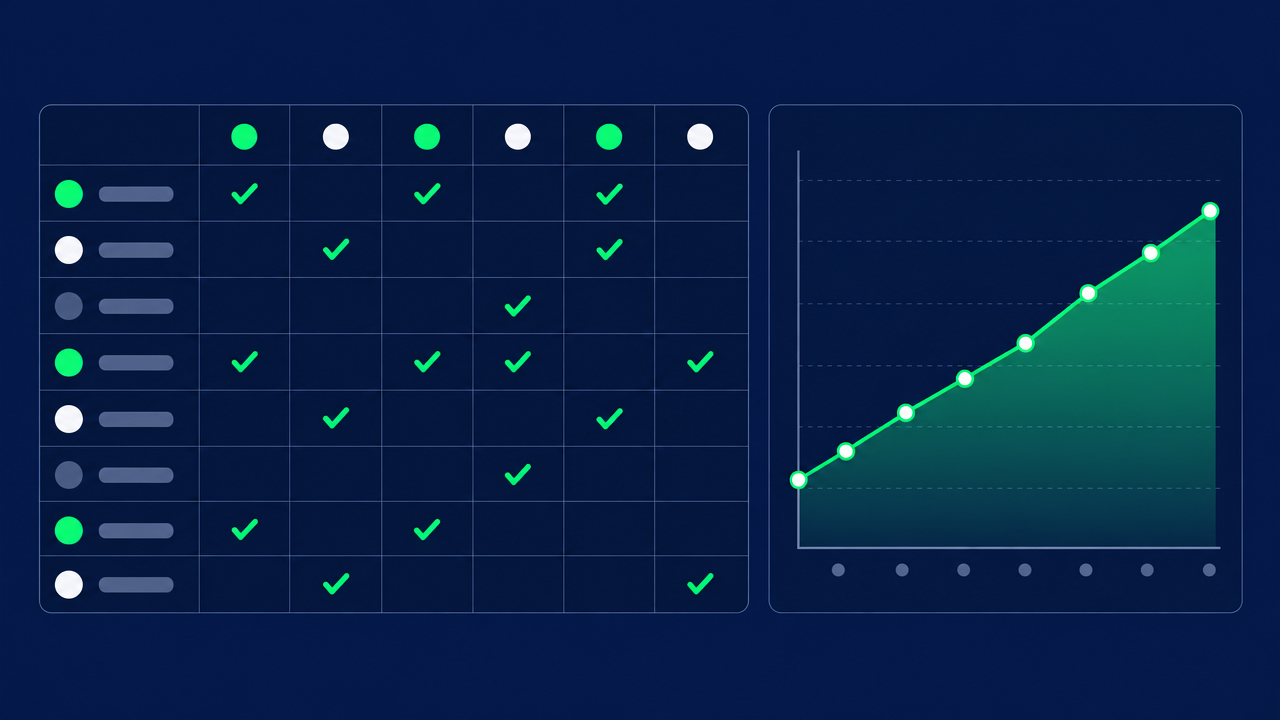
What should an AI visibility audit scoring sheet include?
Keep one row per prompt, per assistant, per run. The columns below cover everything you need.
| Column | What to record |
|---|---|
| Date and assistant | For example, 11 Nov, ChatGPT search |
| Prompt | The exact wording you used |
| Run | 1, 2 or 3 |
| Mentioned? | Yes or no |
| Position | First, in a list, or only in passing |
| Accuracy | Correct, partly wrong, or wrong, with a note |
| Competitors named | Every brand in the answer |
| Sources shown | Links or site names |
| Tone | Positive, neutral or negative |
At the end of each round, add a summary row: the percentage of runs that mentioned you, the number of inaccurate answers, and the five sources that appeared most often.
How do you read the results of an AI visibility audit?
Look for patterns, not single answers. A few common ones and what they usually mean:
- You appear for brand questions but not category questions. Assistants know you exist but don’t see you as a leading option. You need more independent mentions in comparisons, reviews and discussions.
- You appear in one assistant but not others. Each assistant leans on different sources. Check which sources the missing assistant cites.
- The details about you are wrong. Outdated pricing or features usually come from old pages, directories or reviews. Fix your own pages first, then the third-party ones you can update.
- A competitor appears everywhere. Open the sources behind their mentions. They usually have strong coverage in two or three places you don’t.
What should you do after an AI visibility audit?
Turn the findings into a short action list, and limit it to the changes most likely to move the numbers:
- Fix your own site. Make sure AI crawlers can reach your pages, and that key pages answer buyer questions in the first paragraph with current facts. Our guide on how to rank in ChatGPT covers crawler access and answer-first pages.
- Correct wrong details elsewhere. Update directories, review profiles and partner pages that carry old information.
- Join the sources that matter. If assistants keep citing particular Reddit threads, review sites or comparison articles, work on being present there with useful, disclosed contributions. Our Reddit SEO guide and our guide to finding Reddit threads already ranking help with the Reddit side.
- Create the missing comparison. If buyers ask “X vs Y” and no fair comparison exists, publish one on your site.
Then run the next AI visibility audit with the same prompts and compare.
What does an AI visibility audit look like in practice?
Here’s an illustration, not a real client. A two-person bookkeeping firm writes 12 prompts, such as “best bookkeeper for a small online shop” and “do I need a bookkeeper or just software?” It tests them in four assistants, three runs each: 144 answers in total.
The firm appears in 14 of the 144, almost all for brand questions. A larger competitor appears in 61. The sources behind the competitor’s mentions are mostly two comparison articles, one directory and three Reddit threads where the competitor’s owner answered questions years ago. The firm’s own website states an old price, which two assistants repeat.
The action list writes itself: fix the price, ask to be added to the directory, answer the three Reddit threads with disclosed, useful replies, and publish a fair comparison page. The next month’s AI visibility audit uses the same 12 prompts to see whether anything moved.
How often should you run an AI visibility audit?
Monthly works for most businesses. AI assistants change often, but your own improvements take weeks to show, so weekly checks mostly record noise. Run an extra round after a major model update, a product launch or a pricing change.
Keep the prompt list stable. If you change the questions every month, you can’t compare one round with the next. Add new prompts at the bottom and track them separately until they have a few months of history.
Which tools help with an AI visibility audit?
A spreadsheet is enough for 10 to 20 prompts. Paid tools help when you need hundreds of prompts, more assistants or automatic tracking over time. Options include the Semrush AI Visibility Toolkit, Profound, Peec AI and Promptwatch. Features change quickly in this market, so check what each tool tracks before you buy, and keep a small manual check alongside any tool so you understand what the numbers mean.
Google also notes that visits from its AI features are included in the overall Search Console performance data, as explained in its guide to AI features and your website. Watch branded search and referral traffic there alongside your audit. Our guide on how to measure Reddit marketing shows how to put the audit into a monthly scorecard.
What are the common mistakes in an AI visibility audit?
- Judging from one answer instead of several runs.
- Testing only brand questions, which almost always mention you.
- Changing the prompt list every month.
- Ignoring accuracy and counting only mentions.
- Skipping the sources, which is where the fixes usually are.
- Expecting a change within days of updating a page.
AI visibility audit: frequently asked questions
How long does an AI visibility audit take?
The first one takes two to three hours for 10 to 20 prompts across four or five assistants. Monthly repeats take about an hour.
How many prompts do I need?
Start with 10 to 20 that cover category, problem, comparison and brand questions. That’s enough to see a pattern without a paid tool.
Why do I get different answers each time?
AI assistants generate answers fresh, and the sources they find can change between runs. That’s why each prompt should be run two or three times and the results read as a pattern.
Can I audit AI visibility for free?
Yes. The free versions of most assistants and a spreadsheet are enough for a small prompt list.
What’s a good score?
There’s no universal benchmark. Compare your share of mentions with your main competitors, and track whether it rises over several months.
Does Reddit affect AI visibility?
It can. Several assistants cite Reddit threads, especially for recommendation and comparison questions. How often varies by assistant and over time, so check the sources in your own audit.
Want to know which Reddit threads AI assistants are reading for your keywords? Get a free Reddit Opportunity Report.