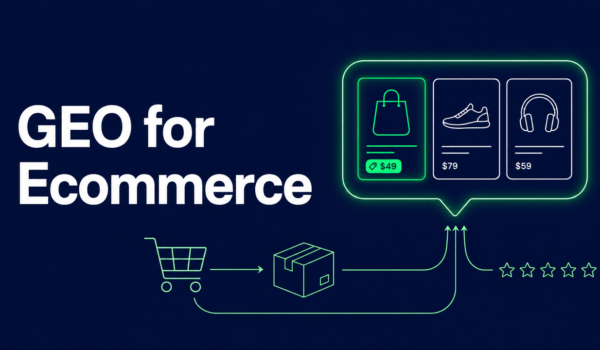
GEO for ecommerce is the work of getting your products shown and recommended when shoppers ask ChatGPT, Google AI Mode, Gemini or Perplexity what to buy. Those tools pick products from two kinds of information: structured product data, such as feeds with prices, availability and attributes, and what reviewers, publishers and forums say about the product. A store that sends clean product data and earns real third-party mentions gives AI tools both. Most of the work is fixing your data and building that outside reputation.
How AI shopping results are chosen
OpenAI explains its process in Shopping with ChatGPT Search. It says product results are not ads, and that ChatGPT considers structured metadata from first-party and third-party providers, other third-party content, and the shopper’s own query and context. When several stores sell the same product, merchants are ranked on availability, price, quality and whether they are the maker or the main seller. Merchants can apply to send a direct product feed, and Shopify stores are already connected through Shopify Catalog.
Google’s AI shopping results draw on Merchant Center. Its help page on free listings for products says eligible products can appear across Search, Shopping, Images, Lens, YouTube, Maps and Gemini, and that free listings are turned on by default in most cases. The page also lists the attributes Google needs: id, title, description, link, image, price and availability, plus brand, GTIN or MPN and condition where they apply.
What to fix first
| Area | What AI tools need | What to do |
|---|---|---|
| Product feed | Accurate price, stock, shipping and return data | Keep Merchant Center and any ChatGPT feed in sync with your store |
| Product titles and attributes | Brand, model, size, color, material, use case | Fill every relevant attribute, not just the required ones |
| Product pages | Specs, sizing, compatibility, care, FAQs | Answer the questions shoppers ask before buying |
| Reviews | Volume, recency and detail | Ask buyers for reviews that mention how they use the product |
| Third-party coverage | Roundups, comparisons, creator reviews | Send samples to reviewers who cover your category |
| Community threads | Real owner experiences | Join relevant Reddit and forum discussions openly |
A step-by-step plan
- Check your feeds. Open Merchant Center and fix every product flagged as needing attention. If you sell on Shopify, check how your products appear in ChatGPT for your main category questions. If not, read OpenAI’s product feed documentation and decide whether to apply.
- Write the shopper questions. List 20 to 30 prompts buyers use, such as “best carry-on backpack for a 15-inch laptop” or “running shoes for flat feet under $120”.
- Run them in each AI tool. Note which products and stores appear, and which review sites, publishers and threads are cited.
- Improve your product pages. Add the details that decide purchases: dimensions, materials, compatibility, sizing advice and a short FAQ. Our guide to schema markup for AI search covers product and review markup.
- Earn outside mentions. Pitch the publishers and creators behind the most-cited roundups. Our guide to Reddit marketing for ecommerce brands covers joining community threads without breaking subreddit rules.
- Track monthly. Rerun the prompts and log how often your products appear and where.
For more on how ChatGPT’s shopping features work, read our ChatGPT shopping guide.
To see which shopping questions your store is missing from today, get a free AI Search Opportunity Report.
Frequently asked questions
Do I have to pay to appear in ChatGPT shopping results?
No. OpenAI says product results are not ads, and ads are shown separately. Your products appear based on relevance, product data and third-party content.
Do I need Google Merchant Center if I already run Shopping ads?
You already have it. Shopping ads use Merchant Center, and the same account can show your products in free listings. Check the free listings status and fix any flagged products.
Are reviews on my own site enough?
They help, but AI tools also look at what independent sources say. A product with reviews on your site plus mentions in roundups, creator videos and forum threads gives AI tools more evidence to recommend it.
How long does it take to show up?
Feed fixes can show up as soon as the platforms reprocess your product data. Earning third-party mentions usually takes a few months.