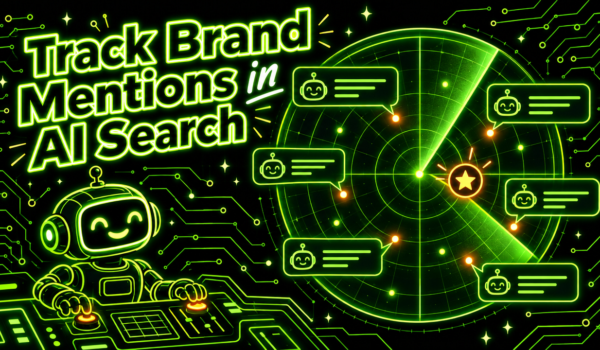
To track brand mentions in AI search, build a fixed list of questions your buyers ask, run them through the AI assistants they use on a regular schedule, and record whether your brand appears, where it appears, how it is described and which sources are cited. Unlike web mentions, brand mentions in AI search do not live on a page you can crawl. Each answer is generated on demand and can change from one run to the next, so tracking them means sampling answers consistently over time.
This guide gives you a practical method to track brand mentions in AI search, a simple template, the metrics worth reporting, and when to move from manual tracking to a tool.

Why brand mentions in AI search are hard to track
Traditional brand monitoring watches the web for new pages, posts and reviews that contain your name. AI answers work differently:
- They are generated per question, so there is no permanent page to monitor.
- The same question can produce different answers on different runs, accounts and locations.
- Many people who read an answer never click a link, so analytics shows only a small part of the effect.
- Each assistant uses different sources and models, so one test does not represent the others.
That is why tracking brand mentions in AI search relies on structured sampling: the same questions, asked the same way, on a regular schedule.
Step 1: build a prompt list for brand mentions in AI search
Your prompt list decides what you learn, so spend time on it. Aim for 20 to 50 prompts to start, covering four types:
- Category prompts: “What is the best accounting software for freelancers?”
- Use case prompts: “What tool should a five-person agency use to track time and invoice clients?”
- Comparison prompts: “[Your brand] vs [competitor], which is better for small teams?”
- Brand prompts: “What do people say about [your brand]?” and “Is [your brand] worth it?”
Write prompts the way real buyers write them, including longer, conversational versions. Pull wording from sales calls, support tickets, search queries and community threads where people ask for recommendations. Our guide to Reddit social listening is a good source of real buyer language. Include a few prompts with typos or casual phrasing, because real users type quickly and assistants handle those questions too. Review the list every quarter, retire prompts nobody asks anymore, and add new ones as your product and market change.
Step 2: choose which AI assistants to track
Track the assistants your audience uses. For most brands that means ChatGPT, Google’s AI Overviews and AI Mode, Gemini, Perplexity and Microsoft Copilot. Add Claude if your audience includes many technical or professional users. Each one draws on different sources, so brand mentions in AI search can look very different from one assistant to the next. Our guide to AI answer engines describes the main ones.
Step 3: standardize how you run tests
Small differences in how you ask can change the answer. Keep conditions consistent:
- Use a fresh chat for each prompt so earlier messages do not influence the answer.
- Turn off personalization or memory features where possible, or use a clean account.
- Note the location you test from, since local answers vary by place.
- Run each important prompt more than once per session to see how stable the answer is.
- Record the date and the assistant mode, such as whether web search was used.
Step 4: record brand mentions in AI search answers

Use a spreadsheet with one row per prompt, per assistant, per run. A simple template looks like this:
| Column | What to record |
|---|---|
| Date and assistant | When the test ran and which assistant and mode you used |
| Prompt | The exact wording you asked |
| Mentioned | Yes or no for your brand |
| Position | First, second, third, or later in the answer |
| Description | A short note of how your brand was described, and any errors |
| Sentiment | Positive, neutral or negative |
| Competitors | Other brands mentioned |
| Sources cited | URLs or domains the assistant cited |
Saving a screenshot or copy of each answer helps when you need to show colleagues what changed.
Step 5: calculate the metrics
Once you have a month of data, a few numbers summarize brand mentions in AI search clearly:
- Mention rate. The percentage of prompts where your brand appears.
- Share of voice. Your mentions divided by all brand mentions in your category prompts, compared with competitors. Our guide to AI share of voice explains the calculation.
- Average position. Where you tend to appear when mentioned.
- Accuracy rate. The share of mentions that describe you correctly.
- Citation share. How often your own pages, and pages that mention you, appear among cited sources.
Break each metric down by assistant and by prompt type. You might find that you do well in comparison prompts but rarely appear in broad category prompts, which points to a different fix.
Step 6: track the sources behind the mentions
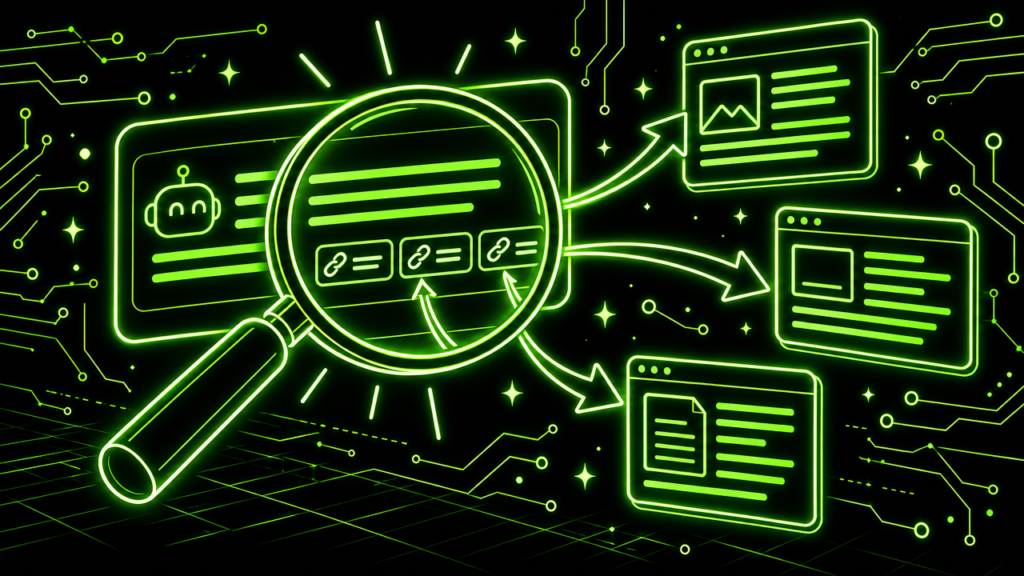
The sources column is the most actionable part of the work. Group cited sources by type: your own site, review platforms, news and trade publications, comparison articles, directories and community threads. If competitors keep appearing because of a few comparison articles or Reddit threads, those are your targets for outreach and participation. Our guide to ChatGPT citations explains what tends to get cited.
Step 7: set a cadence and report
Monthly tracking suits most brands. Run weekly checks on a small set of high-value prompts if you are launching a product or responding to a reputation issue. Report trends, not single results, since individual answers vary. A short monthly summary with mention rate, share of voice, top cited sources and two or three actions keeps the work connected to decisions. Put the test on a shared calendar with a named owner so it keeps happening during busy months, when it is most likely to slip.
Pair this with analytics. Visits from chatgpt.com, perplexity.ai and similar domains show part of the downstream effect, as explained in our guide to AI referral traffic.
Manual tracking vs tools for brand mentions in AI search
Manual tracking works well for up to a few dozen prompts and a handful of assistants. It is cheap, and it forces you to read the answers, which builds intuition. It gets slow as the prompt list grows, and it is hard to run enough samples to smooth out randomness. Many teams keep a small manual set even after buying a tool, because reading answers firsthand catches tone and accuracy problems that summary dashboards miss.
Dedicated AI visibility tools automate the testing. They run your prompts across assistants on a schedule, store answers, calculate mention rate and share of voice, and list cited sources. Some SEO platforms now include AI tracking features, and specialist tools focus only on brand mentions in AI search. When you compare them, check which assistants they cover, how often they run prompts, whether they show full answers and citations, and whether you can export data. Our guide to answer engine optimization tools covers the categories.
Brand mentions in AI search by industry
The method stays the same across industries, but the prompts and sources that matter change.
Local businesses
For local services, prompts include a place: “best family dentist in [city]” or “emergency plumber near [neighborhood]”. Test from the location you serve, or name the location in the prompt. Brand mentions in AI search for local businesses tend to come from listings, reviews and local discussions, so your sources column will often show directories and review sites.
Software companies
Software buyers ask for tools by use case, team size and budget, and they compare named products. Track comparison prompts closely, since they often decide shortlists. Review platforms, comparison articles, documentation and professional communities usually dominate the cited sources.
Consumer products
Consumer prompts often include constraints such as price, size or a specific need. Brand mentions in AI search for products often trace back to review roundups, retailer listings and enthusiast communities, including Reddit threads where buyers compare options.
Professional services
Agencies, consultants and firms get recommended for a specialty in a place or industry. Prompts like “best B2B content agency for SaaS companies” reveal whether assistants associate you with your niche. Directory profiles, expert articles and client reviews tend to drive the answers.
How to share results with your team
Raw spreadsheets rarely get read. Turn your tracking into a one-page monthly summary:
- Headline numbers: mention rate and share of voice, with the change from last month.
- Wins: new prompts where you now appear, and corrected descriptions.
- Gaps: important prompts where competitors appear and you do not.
- Sources: the five most cited domains in your category and whether you appear in each.
- Actions: two or three specific tasks for next month, each with an owner.
Sharing brand mentions in AI search this way connects the numbers to decisions. Product marketing sees where positioning is unclear, PR sees which publications matter, and the community team sees which threads to join.
Sampling and randomness
AI answers include randomness, so a single run can mislead you. For high-value prompts, run each one three to five times per session and record how many runs mention your brand. A brand that appears in four of five runs is in a much stronger position than one that appears in one of five, even though a single test might show both as “mentioned”. Over time, these sampled rates make brand mentions in AI search far easier to compare month to month.
Keep the setup stable as well. If you change accounts, locations or assistant modes, note it, because those changes can shift results more than anything you did to your marketing.
Tracking sentiment and accuracy
Presence is only part of the picture. An answer that mentions you as “expensive and hard to set up” can do more harm than no mention at all. For each mention, note whether the tone is positive, neutral or negative, and whether the facts are right. Track accuracy errors separately, since they often have a simple fix: an outdated profile, an old pricing page or an article that needs a correction. Fixing those sources is one of the fastest ways to improve brand mentions in AI search.
A sample prompt set
Here is how a small company selling invoicing software to freelancers might start. Its first list mixes broad, specific and branded questions:
- What is the best invoicing software for freelancers?
- Which invoicing app is easiest for a designer who bills a few clients a month?
- What invoicing tools send automatic payment reminders?
- What is a cheaper alternative to [large competitor] for invoicing?
- [Brand] vs [competitor]: which is better for freelancers?
- How do freelancers stop clients from paying late?
- What invoicing software works well with a freelancer’s accounting tool?
- Is [brand] good for international clients?
- What do users say about [brand]?
- What are the downsides of [brand]?
The problem prompt, number six, matters as much as the category prompts. People often ask about the problem before they know a tool exists, and an assistant that mentions your product in that answer reaches buyers early. Tracking brand mentions in AI search across all these prompt types shows where you are strong and where you are missing.
Combine prompt tracking with other signals
Prompt tracking tells you what assistants say. Other data tells you what happens next. Combine them for a fuller view:
- Referral traffic from assistant domains in your analytics.
- Branded search volume over time, which often rises when assistants start recommending you.
- A “how did you hear about us” field with an AI assistant option.
- Sales call notes where prospects mention asking an AI tool.
- Web and social monitoring for new reviews and threads, which often become tomorrow’s cited sources.
When brand mentions in AI search rise alongside these signals, you have strong evidence the work is paying off.
Mistakes to avoid when you track brand mentions in AI search
- Testing only branded prompts. Asking “what is [brand]” tells you little about whether buyers find you.
- Changing prompts every month, which makes trends impossible to read.
- Judging from one run. Answers vary, so sample several times.
- Ignoring sources. Mentions without source analysis leave you with no clear next step.
- Tracking without acting. The point is to find the gaps and work on them.
How to improve brand mentions in AI search
Tracking brand mentions in AI search is useful only when it changes what you do. Typical actions include updating outdated profiles that assistants quote, publishing pages for prompts where you are missing, pursuing inclusion in roundups that keep getting cited, and joining community threads that assistants rely on. Our guides to AI brand visibility and the AI visibility audit cover these improvements in detail. For details on how ChatGPT search shows sources, see the OpenAI Help Center.
FAQ: brand mentions in AI search
How do I track brand mentions in AI search for free?
Build a list of buyer prompts, run them monthly in the assistants your audience uses, and record mentions, position, description and sources in a spreadsheet.
How many prompts should I track?
Start with 20 to 50 that cover category, use case, comparison and brand questions. Add more once the process runs smoothly.
Why do AI answers about my brand change?
Assistants generate answers on demand, draw on changing web sources and include some randomness, so results vary between runs and over time.
Which AI assistants should I monitor?
Monitor the ones your audience uses, usually ChatGPT, Google AI Overviews and AI Mode, Gemini, Perplexity and Copilot, plus Claude for technical audiences.
Can analytics show brand mentions in AI search?
Only partly. Analytics shows clicks from assistants, but most people who read an answer never click, so you need prompt testing as well.
How often should I check?
Monthly works for most brands. Check key prompts weekly during launches or reputation issues.
Should I track competitors too?
Yes. Record every brand mentioned in each answer, not only yours. Competitor data shows who leads in each prompt type, which sources favor them, and where you have the best chance to gain ground.
What is a good mention rate?
It depends on your category and the prompts you choose. Compare yourself with the leading competitors on the same prompt list, and focus on the trend over several months rather than a single target number.
Can I track brand mentions in AI search for multiple products?
Yes. Build a separate prompt group for each product or audience, and report them separately so a strong product does not hide gaps in another. Keep the prompts for each group stable over time so the trends stay comparable.
Want to see where your customers are already asking? Get a free Reddit Opportunity Report showing which Reddit threads already rank for your keywords.