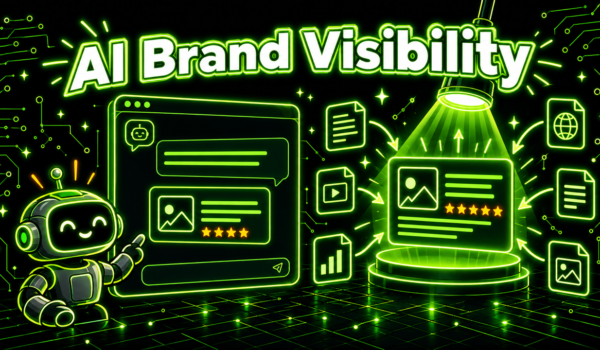
AI brand visibility is how often, how accurately and how favorably AI assistants mention your brand when people ask them questions in your category. When a buyer asks ChatGPT for the best project management tool for a small agency, or asks Perplexity which running shoes suit flat feet, the brands in the answer get attention and the rest are invisible. AI brand visibility covers whether you appear, where you appear in the answer, what the assistant says about you, and which sources it relies on to say it.
This guide explains what shapes AI brand visibility, how to measure it, and what you can change to improve how AI tools describe your brand.
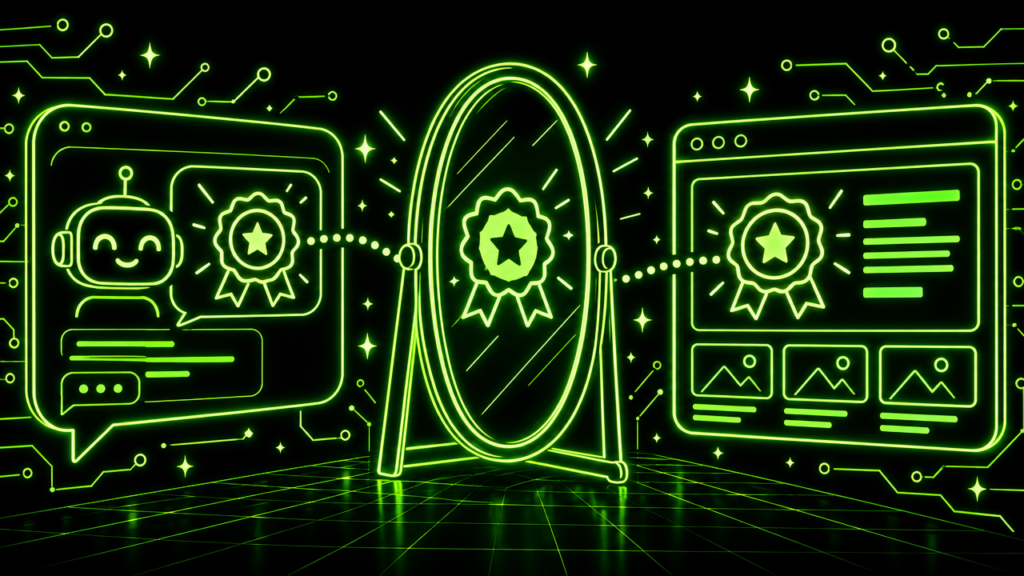
Why AI brand visibility matters
More people now start research in an AI assistant instead of a search results page. An assistant usually gives one summarized answer with a short list of options, rather than ten links. That concentrates attention. A brand that appears in the answer gets considered. A brand that does not appear may never reach the shortlist, even if it ranks well in traditional search.
AI answers also shape perception. If an assistant describes your product as expensive, outdated or hard to use, many readers will accept that framing without checking. AI brand visibility therefore includes accuracy and tone, not just presence. Our guide to LLM visibility covers the broader concept.
The four parts of AI brand visibility
- Presence. Does your brand appear at all when people ask the questions that matter to your business?
- Position. Are you the first recommendation, one of several, or a footnote?
- Description. Is what the assistant says about you accurate, current and favorable?
- Sources. Which pages does the assistant cite or rely on when it mentions you, and do you control or influence them?
A complete view of AI brand visibility tracks all four. A brand mentioned often but described inaccurately has a different problem from a brand described well but rarely mentioned.
What shapes AI brand visibility

Training data
Large language models learn from huge amounts of text gathered before training. If your brand appeared often and in clear context across that text, the model is more likely to know what you do and mention you. If your brand is new or rarely discussed, the model may know little or nothing about it. Training data changes slowly, since it updates only with new model versions.
Live retrieval
Many assistants search the web when they answer, then summarize what they find and cite sources. ChatGPT search, Perplexity, Gemini, Copilot and Google’s AI features all work this way for many questions. Retrieval means current web content can change AI brand visibility within weeks. Our guide on where ChatGPT gets its information explains both paths.
Third-party sources
Assistants lean heavily on what others say about you: review sites, comparison articles, news coverage, industry directories and community discussions such as Reddit threads. These sources carry more weight than your own claims, because they look independent. In many categories, a handful of ranking articles and threads shape most AI answers. Our guide to Reddit AI search explains why community threads matter so much.
Entity clarity
AI systems need to understand that your brand is a distinct thing with specific attributes: what you sell, who you serve, where you operate. A consistent name, clear descriptions on your site, structured data and consistent profiles across the web all help. Brands with names that overlap with common words or other companies face extra confusion. Our guide to entity SEO covers this in depth.
Your own content
Your website still matters. Clear pages that answer buyer questions, explain pricing and compare you with alternatives give assistants accurate material to quote. Pages blocked from crawlers or hidden behind scripts cannot help.
How to measure AI brand visibility
Start with a list of 20 to 50 questions your buyers actually ask. Include category questions (“best CRM for a small sales team”), comparison questions (“HubSpot vs Pipedrive”), problem questions (“how do I stop losing leads in my inbox”) and direct brand questions (“is [brand] good for agencies”). Then run them through the assistants your audience uses and record:
- Whether your brand is mentioned.
- Its position in the answer.
- How it is described, including any errors.
- Which competitors appear.
- Which sources are cited.
Repeat the test monthly, since answers vary from run to run and change over time. The share of answers that mention you, compared with competitors, gives you an AI share of voice figure. For a deeper starting point, use our AI visibility audit checklist. Dedicated tools can automate the testing at larger scale.
How to improve AI brand visibility

Fix the facts first
Make your name, description, categories, pricing model, locations and key features consistent across your website, social profiles, review sites and directories. Correct outdated information wherever it appears. Assistants repeat what they find, so stale facts spread. Start with the profiles that appear most often among cited sources in your test answers, since those are the ones assistants read first. Keep a simple list of every profile you own so updates reach all of them when something changes.
Answer the questions buyers ask
Create pages that answer your target questions directly, with the answer near the top and specifics underneath. Comparison pages, use case pages and honest “who this is for” sections give assistants the context to recommend you for the right situations. Write in plain language, and include the details buyers compare, such as price ranges, setup time and who the product is not a good fit for.
Earn mentions in the sources assistants trust
Look at the sources cited in your test answers. These are your priority targets. Work to get included in ranking roundups, keep your review profiles active, pursue coverage in trade publications, and take part in community discussions where your buyers ask for recommendations. Mentions without links still count toward AI brand visibility, as our guide to unlinked brand mentions explains.
Encourage real reviews and discussion
Detailed customer reviews and genuine community posts give assistants evidence about what your product does well. Ask satisfied customers to share their experience on the platforms that appear in AI answers for your category. Never fake reviews or posts, since platforms remove them and the discovery can damage your reputation in the very sources assistants read.
Keep crawlers in mind
Check that your robots.txt allows the search crawlers assistants use, and that key pages load as readable HTML. Google explains how its AI features use web content in its documentation on AI features and your website.
Address negative narratives
If assistants repeat a complaint about your brand, find where it comes from. Often it traces to a few popular threads or reviews. Fix the underlying issue if it is real, respond publicly where appropriate, and create clear, current information that shows what changed. Over time, newer sources can balance older criticism.
Common AI brand visibility problems
| Problem | Typical cause | First step |
|---|---|---|
| Brand never mentioned | Few third-party mentions, new brand, unclear category | Get listed in roundups and directories, join community discussions |
| Outdated description | Old articles and profiles, stale training data | Update profiles and publish current pages that rank |
| Confused with another company | Similar name, weak entity signals | Clarify name and category everywhere, add structured data |
| Competitor always ranked first | Competitor dominates reviews and comparison content | Target the specific sources cited for that answer |
| Negative framing | Popular critical threads or reviews | Fix the issue, respond publicly, publish updated information |
AI brand visibility by business type
Local businesses
For local businesses, assistants answer questions like “best dentist near me” or “good brunch spot downtown” from listings, reviews and local discussions. Consistent details on your Google Business Profile, Bing Places, Apple Business Connect and major directories, plus a steady flow of detailed reviews, carry the most weight. Local news coverage and mentions in city subreddits help too.
Ecommerce and consumer brands
Product questions pull from reviews, comparison articles, retailer listings and enthusiast communities. Clear product pages with specifications, honest comparisons and active review profiles give assistants solid material. Hobby communities often decide which products get recommended, so participation there matters.
Software and SaaS
Software buyers ask assistants which tool fits a use case and budget. Review platforms, comparison articles, documentation and professional communities are the main sources. Clear pricing pages and use case pages reduce the chance that assistants describe your product inaccurately.
Professional services
Agencies, consultants, law firms and accountants are recommended based on specialty, location and reputation. Detailed service pages, expert articles, speaking appearances, directory profiles and client reviews all shape AI brand visibility for service firms.
Who owns AI brand visibility
AI brand visibility touches several teams, which is why it often falls between the cracks. SEO teams own the website and crawlability. PR and communications own media coverage and messaging. Product marketing owns positioning and comparison content. Customer success influences reviews. Community or social teams own participation in forums and Reddit. A simple fix is to name one owner who runs the monthly measurement and shares the findings with each team, along with one or two specific actions for each.
A 90-day plan to improve AI brand visibility
- Month 1: build your prompt list, run the baseline test, and fix inconsistent facts across your site, profiles and directories.
- Month 2: publish or improve pages for the prompts where you are missing, and start outreach to the roundups and directories cited most often.
- Month 3: launch a review request routine, join the community threads that assistants cite, and rerun the full test to compare against your baseline.
Expect uneven progress. Some prompts change quickly because the sources behind them update often, while others take months. Keep the prompt list stable so you can see real trends in AI brand visibility rather than noise.
An example AI brand visibility review
Imagine a mid-sized project management software company runs 30 buyer prompts across ChatGPT, Perplexity and Gemini. It appears in 9 of 30 answers, usually in third or fourth position. Two assistants describe its pricing using an old plan structure. The most cited sources are two comparison articles from major software review sites and a popular Reddit thread where users compare tools for agencies.
The team takes three actions. It updates its pricing information on the review sites and its own pricing page. It contacts the authors of the comparison articles with current details and a demo account. It has its customer success lead join the Reddit thread and similar new ones, disclosing their role and answering questions. Three months later, the brand appears in 14 of 30 answers and the pricing errors are gone. Nothing about the product changed. The sources assistants read did.
AI brand visibility and traditional SEO
The two overlap more than they differ. Pages that rank well in search are more likely to be retrieved by AI assistants, and brands with strong reputations tend to do well in both. The main differences are that AI answers compress many sources into one response, lean more on third-party opinion, and often mention brands without linking. That makes AI brand visibility partly a public relations and community job, not only a website job. Our guide comparing SEO vs GEO explains how the disciplines fit together.
Signs your efforts are working
Progress often shows up in small ways before the headline numbers move. Watch for these signals over a few months:
- Your brand appears for narrow, specific prompts before it appears for broad category prompts.
- Descriptions become more accurate, with current pricing, features and positioning.
- New sources show up in citations next to your name, such as an updated review profile or a thread you joined.
- Visits from chatgpt.com, perplexity.ai and similar domains start appearing in your analytics.
- Sales calls include prospects who say an AI assistant suggested you.
- Branded search volume rises without a matching increase in ad spend.
Record these alongside your monthly test results. Together they tell a clearer story than any single metric, and they help you explain the value of the work to people outside marketing.
What not to do
Some tactics promise fast results and create lasting damage. Avoid fake reviews, paid posts without disclosure, networks of low-quality pages that mention your brand, and attempts to plant instructions for AI systems in hidden text on your site. Platforms and AI providers work to detect manipulation, and being caught can hurt your reputation in exactly the sources assistants rely on. The durable path is slower and simpler: accurate information, useful content and real opinions from real customers.
AI brand visibility FAQ
What is AI brand visibility?
It is how often and how accurately AI assistants such as ChatGPT, Gemini and Perplexity mention and describe your brand when people ask questions in your category.
How do I check my AI brand visibility?
Run a list of real buyer questions through the assistants your audience uses, record whether and how you are mentioned and which sources are cited, and repeat monthly.
Can I pay to improve AI brand visibility?
Organic AI answers are not for sale. You can improve visibility by fixing your facts, publishing useful content and earning mentions in the sources assistants trust.
How long does it take to improve AI brand visibility?
Changes in sources that assistants retrieve live can show up within weeks. Changes in what models learned during training take longer, because they depend on new model versions.
Does Reddit affect AI brand visibility?
Yes. AI tools often cite Reddit threads for product and service questions, so what people say about your brand on Reddit can shape AI answers.
Why does AI describe my brand incorrectly?
Usually because outdated or conflicting information exists in the sources it reads. Update your profiles and pages, and make sure current information appears in places assistants cite.
Is AI brand visibility the same as AI share of voice?
Share of voice is one measure inside it. It compares how often you are mentioned with how often competitors are mentioned. AI brand visibility also covers how you are described, where you appear in answers and which sources assistants use.
Do small brands have a chance against large competitors?
Yes, especially for specific questions. Assistants try to match answers to the details in a prompt, so a smaller brand that clearly serves a niche, with reviews and discussions to back it up, can appear ahead of larger names for that niche.
Which teams should be involved?
SEO, PR, product marketing, customer success and community teams all influence the sources assistants read. One owner should coordinate measurement and share actions with each team every month.
Want to see where your customers are already asking? Get a free Reddit Opportunity Report showing which Reddit threads already rank for your keywords.